
Sliding Door Repairs · Gauteng · October 2026
Sliding Door Glass Types Explained — Gauteng Guide
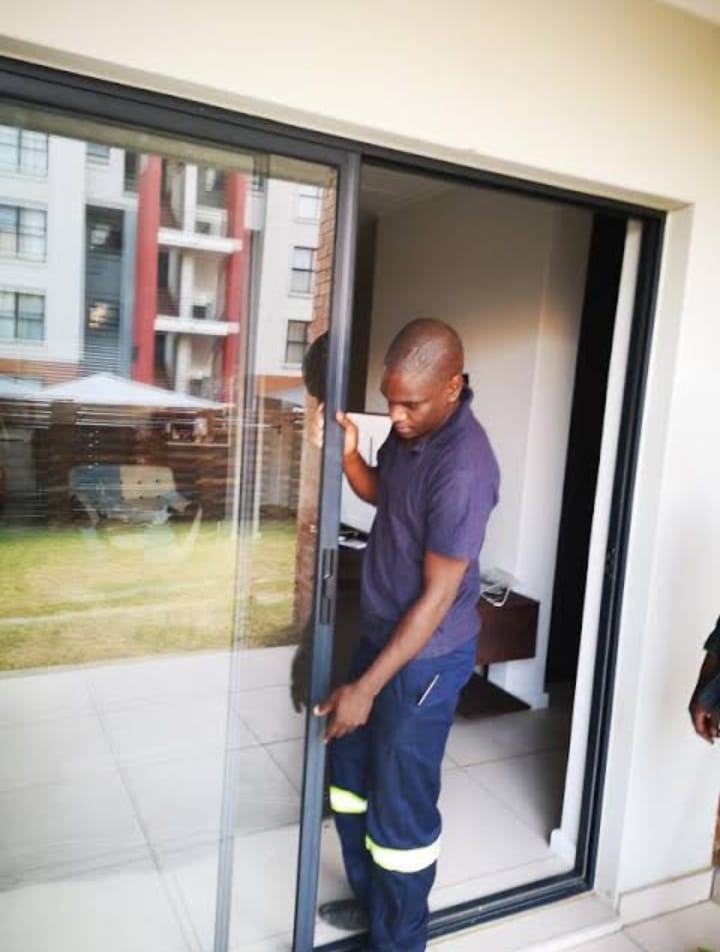
When a sliding door glass panel breaks, cracks, or needs upgrading, you'll be asked to choose a glass type. The choice affects performance, cost, safety rating, and — in a gated estate or sectional title — potentially body corporate compliance. Here's what you need to know about the four types used in Gauteng.
Sliding door glass replacement across Gauteng. Same or next day. From R850.
Call 078 246 48981. Clear toughened safety glass
Clear toughened glass — also called tempered glass — is the standard for sliding doors in South Africa. It is required by SANS building regulations for any glazed panel in a door or within 300mm of a door opening. Toughened glass is up to five times stronger than standard float glass of the same thickness, and when it does break, it shatters into small, relatively safe pebbles rather than large sharp shards.
Sliding doors typically use 6mm or 8mm toughened glass. Heavier, larger panels use 10mm. Clear toughened glass is the most affordable option and is appropriate for most standard residential sliding doors.
Replacement cost: Clear toughened glass panels start from R850 for a standard-size replacement. Larger panels and thicker glass are priced on size. We carry common sizes on the vehicle.
2. Tinted toughened glass
Tinted glass reduces solar heat gain and glare — relevant for north- or west-facing sliding doors in Gauteng where afternoon sun can make an indoor space uncomfortably hot. Common tints include bronze, grey, and blue-green. All tinted glass used in sliding doors is also toughened to meet safety requirements.
Tinted glass reduces visible light transmission (you see less clearly through it, particularly from outside looking in) and reduces solar heat gain coefficient (SHGC). In a north-facing room, tinted glass can reduce air conditioning load meaningfully. The trade-off is a slightly darker interior during overcast periods.
Important for estates: If your sliding door is in a Balwin, Cosmopolitan or other body-corporate development, check whether the estate's aesthetic rules specify clear glass. Replacing clear glass with a tinted panel may require body corporate approval.
3. Laminated safety glass
Laminated glass consists of two layers of toughened glass bonded with a PVB (polyvinyl butyral) interlayer. When laminated glass breaks, the interlayer holds the shards in place — the glass cracks but stays in the frame, preventing immediate entry. This makes it the preferred choice for security-critical positions: a ground-floor sliding door in a high-burglary-risk area, a door adjacent to a perimeter wall, or any door where forced entry is a primary concern.
Laminated glass also provides significant noise reduction — the PVB interlayer absorbs acoustic energy, making it useful for doors facing a busy road or a noisy neighbour.
Security note: Laminated glass will not stop a determined intruder with tools, but it significantly increases the time and effort required to breach the panel — which is the primary deterrent value.
4. Double-glazed units (DGU)
A double-glazed unit (DGU) consists of two glass panels separated by a sealed air or argon gas gap — typically 6mm to 12mm — bonded by an aluminium spacer bar. The gap provides thermal insulation and acoustic insulation that single-pane glass cannot match. DGUs are standard in the UK and Europe; in Gauteng they're used primarily in high-specification homes, in rooms where temperature control is critical, or in south-facing rooms that don't receive direct sunlight.
DGUs are significantly heavier than single-pane glass and may require roller replacement or track assessment at the same time as glass replacement, as the increased load accelerates roller wear.
Which glass type do you need?
- Standard residential replacement: clear toughened glass from R850
- North or west-facing door with heat or glare issues: tinted toughened glass
- Security-critical position or noise reduction priority: laminated glass
- High-spec home, temperature-controlled room, maximum noise reduction: DGU
- Body corporate estate: check aesthetic rules before choosing tinted or laminated
Frequently Asked Questions
- What type of glass is in my sliding door?
- Most residential sliding doors in Gauteng use 6mm or 8mm clear toughened (tempered) safety glass. You can check by looking for the SANS safety mark etched into the glass corner — it will say "toughened", "tempered", or "TS".
- How much does sliding door glass replacement cost in Gauteng?
- From R850 for a standard clear toughened panel. Tinted, laminated, and DGU panels are priced on size and specification — call us for a quote on your specific door.
- Can I replace the glass without replacing the frame?
- Yes. In most cases the glass panel is replaced within the existing frame — the glazing beads are removed, the old panel taken out, and a new panel cut to size and fitted. No frame replacement needed.
- How long does glass replacement take?
- Standard clear toughened glass is usually same-day. Tinted, laminated, or DGU panels may be next day depending on the specification and size. We'll confirm lead time when you call.
Book your sliding door glass replacement today
Same or next-day glass replacement across Gauteng. Clear toughened from R850. Tinted, laminated, and DGU panels also available. No call-out fee. Call or WhatsApp us.